Choose "Make this ad premium" at checkout.
Understanding Motorcycle Batteries: AGM vs. Lithium-Ion vs. iGel for Cold-Cranking Performance London
- Location: London, London, United Kingdom
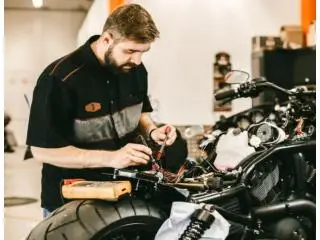
When the temperature drops and the frost settles on your saddle, the internal chemistry of your motorcycle becomes your greatest ally or your most frustrating foe. For riders who don't hang up their leathers just because the seasons change, the ability of a battery to turn the engine over in freezing conditions—measured as Cold Cranking Amps (CCA)—is the ultimate metric of reliability. Choosing between Absorbed Glass Mat (AGM), Lithium-Ion (LiFePO4), and the newer iGel technology isn't just about price; it is about understanding how molecular movement reacts to the cold. If you are looking to master these technical nuances and perform your own swaps, enrolling in a motorbike maintenance course can provide the hands-on diagnostic skills needed to manage your bike's electrical health effectively throughout the year.
The Stalwart Reliability of AGM Batteries in Low Temperatures
Absorbed Glass Mat (AGM) batteries have long been the industry standard for high-performance motorcycles, particularly those used in temperate or cold climates. Unlike traditional flooded lead-acid batteries, AGM units utilize a fiberglass mat to soak up the electrolyte, making them spill-proof and highly vibration-resistant. In terms of cold-crank performance, AGM technology excels because the internal resistance is significantly lower than that of standard batteries. This allows the battery to discharge its energy rapidly, providing a powerful burst of current even when the oil in your engine has thickened due to the cold.
The chemistry of an AGM battery is relatively stable in freezing temperatures. While all lead-acid variants lose some capacity when the thermometer dips below zero, AGM holds onto its cranking power better than almost any other traditional tech. It doesn't suffer from "electrolyte stratification," meaning the power remains consistent. However, even the best AGM battery requires a healthy charging system to stay at peak performance. Understanding how to test these systems is a core component of a professional motorbike maintenance course, as a failing stator can quickly ruin even the most expensive AGM unit during a harsh winter.
Lithium-Ion Technology and the Cold Start Paradox
Lithium-Ion motorcycle batteries (specifically Lithium Iron Phosphate or LiFePO4) have revolutionized the market due to their incredible weight savings and high energy density. However, they behave very differently from lead-acid batteries when the temperature drops. Lithium batteries have a high internal resistance when they are "cold." If you attempt to start your bike at 0°C (32°F) with a lithium battery, it might initially appear dead or weak. This leads many riders to believe the battery has failed, when in reality, the electrons simply need to be "woken up."
To get the best cold-crank performance from a lithium battery, riders often have to perform a "pre-warm" ritual, such as leaving the headlights on for two minutes before hitting the starter. This internal current flow warms the lithium cells, reducing resistance and eventually allowing the battery to provide a massive surge of power that often exceeds AGM capabilities once warmed. While they are superior in weight and longevity, the extra steps required in winter can be a deterrent for some. Learning the specific charging requirements and "wake-up" procedures for these modern cells is a vital part of any comprehensive motorbike maintenance course, ensuring you aren't left stranded by a misunderstood technology.
iGel Technology: The New Frontier of Vibration and Thermal Resistance
iGel batteries represent an evolution of the traditional Gel battery, specifically enhanced with intelligent features like digital displays for real-time voltage monitoring. In an iGel battery, the electrolyte is suspended in a silica-based gel rather than a liquid or a mat. This makes the battery incredibly resilient against the "sulfation" that typically kills motorcycle batteries during long periods of winter storage. When it comes to cold-cranking, iGel batteries sit comfortably between AGM and Lithium. They offer a more consistent discharge than Lithium in immediate cold starts but generally provide slightly fewer peak amps than a top-tier AGM.
The real advantage of iGel in cold weather isn't just the initial crank, but the durability of the chemistry. The gel prevents the plates from being damaged by the expansion and contraction caused by extreme temperature fluctuations. Furthermore, the built-in alarm systems in many iGel units warn riders when the voltage is too low to successfully crank the engine, preventing the "click-click-click" of a failed start. Mastering the installation and terminal care for these specialized units is a skill often highlighted in a motorbike maintenance course, as the gel consistency requires specific handling to avoid air pockets or terminal corrosion over time.


Useful information
- Avoid scams by acting locally or paying with PayPal
- Never pay with Western Union, Moneygram or other anonymous payment services
- Don't buy or sell outside of your country. Don't accept cashier cheques from outside your country
- This site is never involved in any transaction, and does not handle payments, shipping, guarantee transactions, provide escrow services, or offer "buyer protection" or "seller certification"
Related listings
-
 Tires on Monthly Payments Plan - Buy Tires on Credit & Pay LaterVehicles - San Diego (California) - April 11, 2026
Tires on Monthly Payments Plan - Buy Tires on Credit & Pay Later | Buying Tires On Credit | Upgrade your ride with our quality tires. Tires monthly payments and various financing options are available. With TireBros24, you can buy the p...
-
 Duck Calls Double Reed in 3 styles and Tunable Single read callsCar Parts - - April 10, 2026
Looking for custom Graphics for your Car Truck Motorcycle or Golf Cart? Check out our HUGE selection of of stripes and graphics Please visit here for more details...
-
 Bradley's Towing ServiceCars - Ellabell (Georgia) - April 9, 2026
At Bradley's Towing Service in Ellabell, GA, we have everything to properly take care of your wrecker needs. Since we're located right next to the highway, we can get to you quickly when you've experienced an automobile accident or a simple breakdown...